
What lycopene is
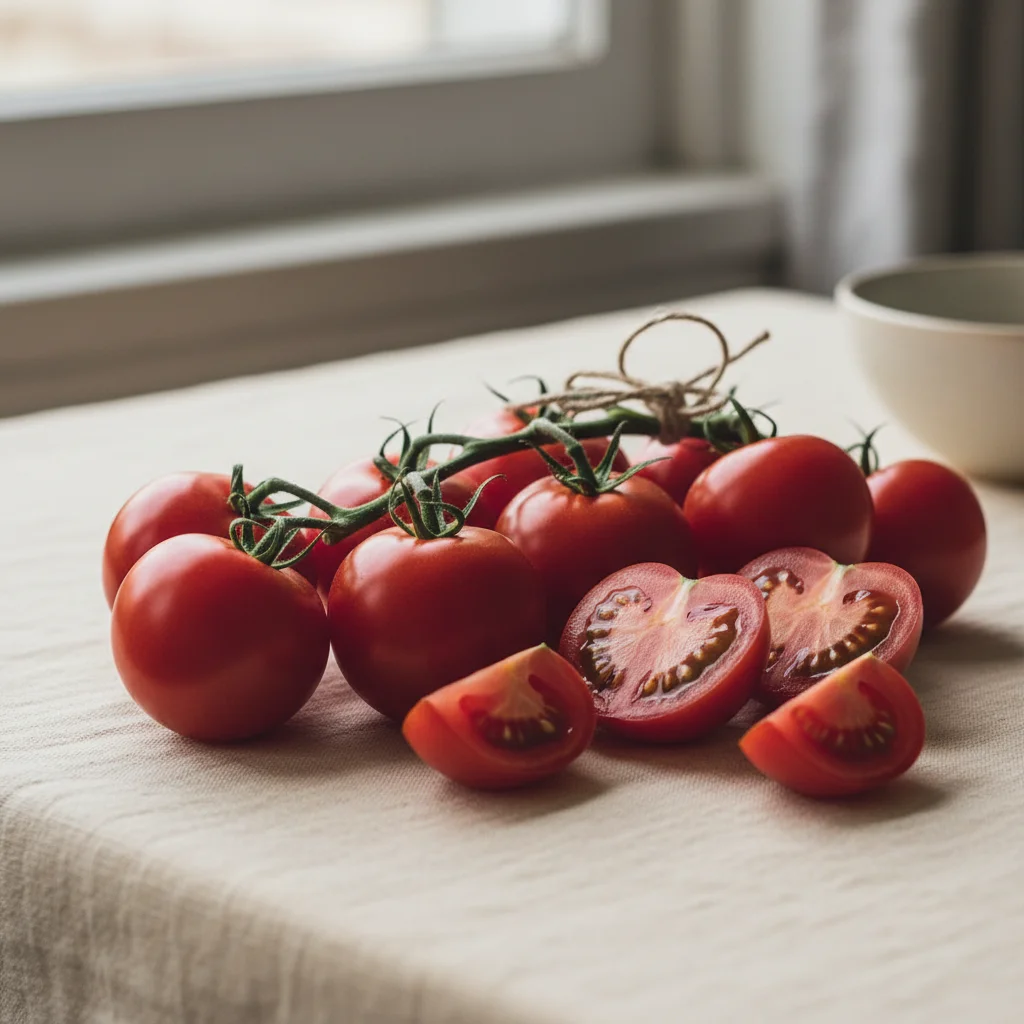
Lycopene is a red-pigmented carotenoid found most abundantly in tomatoes, watermelon, pink grapefruit, and guava. Unlike beta carotene, it is not a vitamin A precursor, which is why it doesn't carry the hypervitaminosis risk that pro-vitamin A carotenoids do at high doses.
Lycopene is highly lipophilic. Like astaxanthin, it's transported by lipoproteins and concentrates in subcutaneous fat tissue, which is why it shows up in skin as a visible warm-red undertone after consistent dietary or supplemental intake.
Photoprotection: the MED evidence
The landmark reference here is Stahl and Sies' 2007 paper in the American Journal of Clinical Nutrition, which measured the minimum erythemal dose (MED), the amount of UV a subject's skin can absorb before reddening, after carotenoid supplementation.
After ~10 weeks of a carotenoid mix including lycopene, subjects' MED was measurably higher. Put plainly: skin loaded with dietary carotenoids was more resistant to UV-induced redness. This is internal photoprotection, and it's part of the logic behind stacking lycopene with astaxanthin in ChUV.
Internal photoprotection is not a replacement for topical SPF. The effect size is meaningful, but modest relative to a broad-spectrum sunscreen. Think of it as additive, not substitutive.
Adjacent benefits worth knowing
Lycopene has a body of research outside the skin-tanning space that's worth acknowledging:
- Cardiovascular. Mozos and colleagues (2018, Oxid Med Cell Longev) reviewed lycopene's effects on oxidative stress markers associated with cardiovascular risk.
- UV-induced erythema reduction. The same Stahl and Sies work documenting MED increases also showed less visible redness in lycopene-supplemented groups.
These aren't claims ChUV makes. The gummy is positioned for skin tone, not heart health. But they're part of why lycopene has a wider literature footprint than most carotenoids.
Effective dose
Human skin trials typically use lycopene in the 5-16 mg/day range. Results are more consistent at the upper end, particularly when lycopene is paired with other carotenoids.
ChUV tanning gummies use 5.5 mg of lycopene per gummy. The dose is calibrated to sit alongside astaxanthin, where the stack produces a more balanced warm tone than either ingredient alone.
Lycopene in ChUV
The lycopene in ChUV's daily tanning gummy is extracted from tomato concentrate and paired with 11 mg of astaxanthin in a single daily gummy. Both are fat-soluble, so take ChUV with a meal containing some healthy fat for optimal absorption.
Curious about what we deliberately left out? Read why ChUV skips beta carotene.