
What astaxanthin is
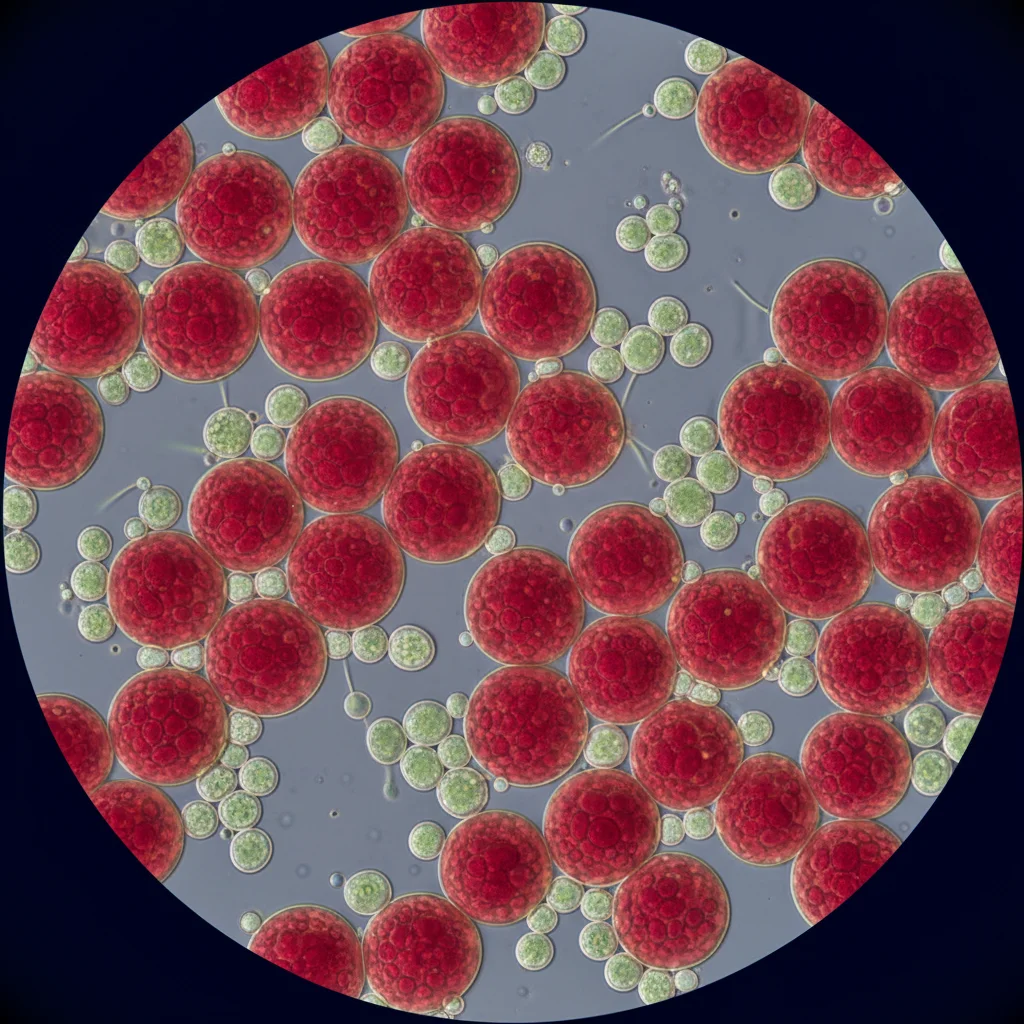
Astaxanthin is a xanthophyll carotenoid produced by the microalga Haematococcus pluvialis under stress. It's the same compound that accumulates up the food chain in krill, shrimp, and salmon, and gives those tissues their characteristic red-pink color.
Chemically, astaxanthin is unusual among carotenoids: its polar end groups let it sit across cell membranes with the lipid-soluble core embedded in the bilayer and the polar ends poking into the aqueous environment on either side. That structural quirk is why it works as an antioxidant in places most carotenoids can't reach.
What the clinical research shows
Astaxanthin has been studied in human skin for three related outcomes:
- Reduced UV-induced oxidative stress. Astaxanthin quenches singlet oxygen and lipid peroxidation radicals generated when skin absorbs UVA. In supplement trials, markers of oxidative damage drop within weeks.
- Warmer skin tone. The pigment deposits in subcutaneous fat and contributes to carotenoid-based skin coloration, the same mechanism described in our how-it-works pillar.
- Improved skin elasticity and hydration. Multiple trials (e.g., Kidd, 2011 in Alternative Medicine Review) report improvements in measured skin parameters after 6-12 weeks of daily astaxanthin.
Kidd P. Astaxanthin, Cell Membrane Nutrient with Diverse Clinical Benefits and Anti-Aging Potential. Alternative Medicine Review, 2011. One of the most cited reviews on astaxanthin's clinical profile, including skin outcomes.
Effective dose
Human trials on astaxanthin for skin benefits cluster in the 4-12 mg per day range, with most visible results reported after 6-12 weeks of continuous use. Below 4 mg, outcomes are inconsistent; above 12 mg, diminishing returns.
ChUV tanning gummies use 11 mg of astaxanthin per gummy, squarely in the upper end of the clinical window. One gummy per day hits the effective dose without the stacking required on most competitor products.
Safety profile
Astaxanthin has a strong safety record in human trials. It's been used at doses of 4-20 mg/day for 12+ weeks with no significant adverse events reported. Unlike beta carotene, it does not produce carotenoderma (orange discoloration) at supplement doses, because its chemistry routes it differently in tissue.
Astaxanthin is fat-soluble, so take ChUV with a meal containing some healthy fat for best absorption. Pregnant or nursing women should consult a physician before starting any supplement.
Astaxanthin in ChUV
ChUV's astaxanthin tanning gummy sources its astaxanthin from Haematococcus pluvialis microalgae, the most studied natural source. Each gummy delivers 11 mg standardized astaxanthin alongside 5.5 mg of lycopene for a stacked approach to carotenoid pigmentation.
If you want to dig into the other half of the stack next, read the lycopene pillar.