
The Science of Tanning Gummies: Optimal Astaxanthin Dosage

Astaxanthin is a red‑orange carotenoid found in certain algae and seafood that can build up in skin and create a gentle, sunless warm tone when taken regularly. This guide breaks down how daily doses support carotenoid accumulation in the epidermis, how astaxanthin works alongside co‑ingredients like lycopene, typical timelines for seeing change, and the safety and interaction checks to consider. If you want a natural, UV‑free glow without bronzers or extra sun time, evidence‑based supplementation can produce a gradual, skin‑deep color shift while adding antioxidant support. Read on for recommended daily ranges, practical intake tips, week‑by‑week expectations, and safety points to review with a clinician. We’ll also show how real products combine astaxanthin and lycopene and where a supplement fits in a broader sunless tanning plan.
Try ChUV by CAYO Nutra to get a clinical dose of astaxanthin formulated to help induce a natural-looking carotenoid tan.
What Is the Recommended Astaxanthin Dosage for Skin Darkening?
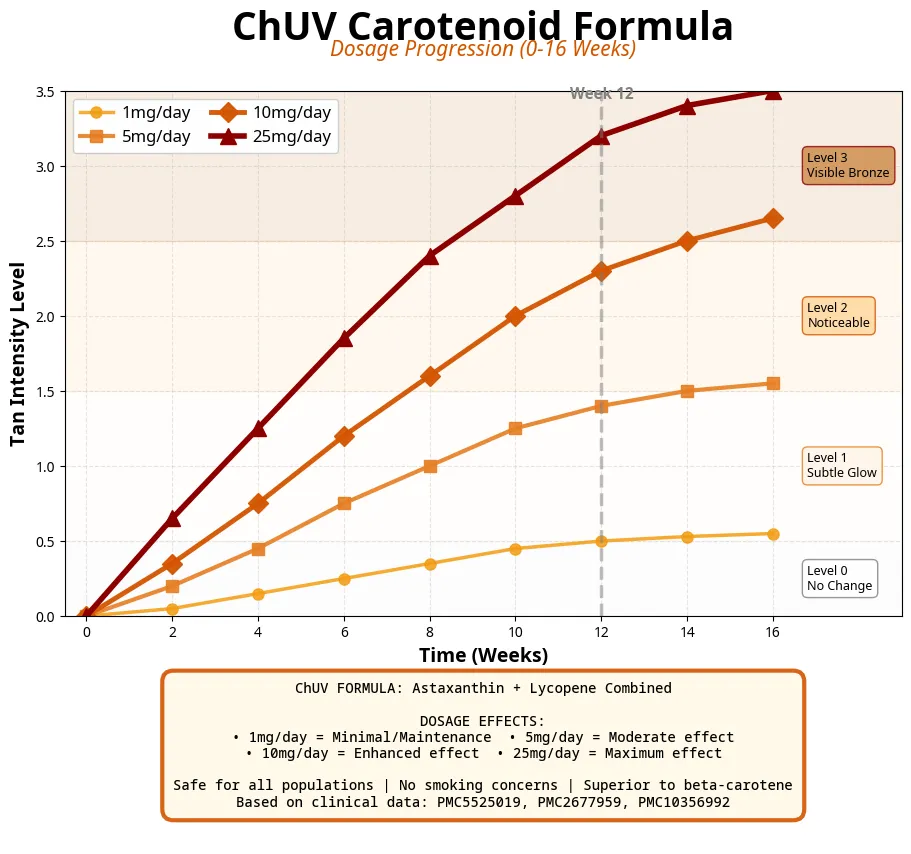
For a noticeable, gradual change in skin tone, astaxanthin is typically used in low‑milligram daily doses that build up in the epidermis over several weeks. Most research and product formulations aim for a moderate range that balances effectiveness with tolerability. Individual response depends on baseline diet and absorption. The table below compares common dose brackets and what users generally expect. After that, we’ll cover how to translate milligrams into product servings and habits that support steady absorption.
| Dose Category | Typical Daily Amount | Expected Effect |
|---|---|---|
| Minimal Maintenance | 1-5mg | Minimal early change; used to assess tolerance |
| Typical Effect | 10-15mg | Gradual skin tone shift and antioxidant benefits |
| Maximum Effect | 15-25mg | Sustained color and skin health support |
This table outlines practical dose ranges and likely outcomes; next we explain serving equivalents and how meal timing affects effective dose.
How Much Astaxanthin Should You Take Daily for a Natural Tan?
For most adults aiming for a subtle, natural tan, a practical daily target is 10–15 mg taken consistently with a meal that contains fat to help absorption. Begin near the lower end for the first 2–4 weeks to check tolerance, then increase if you see change and have no issues. With gummies or capsules, convert the milligram target to servings (for example, one or two gummies depending on the product) and take the same amount each day. Taking astaxanthin with dietary fat improves carotenoid uptake and helps build reliable epidermal deposition for a steadier color shift.
What Factors Influence Astaxanthin Dosage for Skin Color?
How much astaxanthin you’ll need depends on several personal factors, so dosing isn’t one‑size‑fits‑all. Skin phototype and baseline pigment affect how noticeable carotenoid coloration will be. Dietary carotenoid intake and fat consumption change bioavailability. Bodyweight and tissue distribution influence concentration per tissue mass, and the intensity you want determines whether you stay at maintenance or use a short boost. Consistency and duration are the biggest drivers of visible results, so set expectations based on these variables before changing your dose.
How Does Astaxanthin Work to Produce a Natural Tan?
Astaxanthin creates a natural tan mainly by accumulating in the epidermis and adding a warm carotenoid hue, while also reducing oxidative stress that can make skin look dull. This is different from increasing melanin — instead, the pigment deposits alter how light is absorbed and reflected in the top layers of skin, producing a sun‑kissed appearance over time. Its antioxidant action helps protect cells from oxidative damage, which can keep skin looking clearer and even. The table below summarizes where astaxanthin and supporting ingredients act in the skin and what they do.
| Compound | Action Site | Mechanism / Effect |
|---|---|---|
| Astaxanthin | Epidermis | Accumulates in skin lipids, adding warm carotenoid coloration |
| Lycopene | Dermal/epidermal layers | Synergistic antioxidant protection and color enhancement |
| Carotenoids (general) | Skin surface & lipid compartments | Modify light reflectance and reduce oxidative dulling |
This quick mechanism summary shows why combining carotenoids can both shift perceived color and support skin health; the next section looks at melanin interactions and formulation choices.
What Is the Role of Astaxanthin in Skin Pigmentation and Melanin?
Astaxanthin doesn’t boost melanin production. Instead, it changes skin tone by depositing pigment and offering photoprotective antioxidant effects that preserve the look of existing pigment. The result is a warm, reddish‑gold layer over your natural melanin rather than an increase in melanogenesis, so outcomes differ from UV‑driven tanning. That distinction matters because carotenoid tanning is gradual, reversible, and doesn’t provide the same UV protection that increased melanin does. Knowing this helps set realistic expectations for a sunless, natural enhancement of your baseline tone.
Astaxanthin's Role in Skin Health: Hyperpigmentation and Barrier Function
The effects of ASX on hyperpigmentation suppression and skin barrier improvement are discussed in this review.
Astaxanthin in skin health, repair, and disease: A comprehensive review, ME Nielsen, 2018
How Does Lycopene Enhance Astaxanthin’s Tanning Effects?
Lycopene complements astaxanthin by adding antioxidant capacity and its own subtle pigment, which can deepen warm tones when both carotenoids build up in skin. Both localize in skin lipids and together reduce oxidative stress that can blunt color and texture, so combined formulations often produce more noticeable, longer‑lasting shifts than a single carotenoid. When comparing products, look for carotenoid blends that emphasize both color and antioxidant support.
After explaining mechanism and synergy, consider how products put these ideas into practice; CAYO Nutraceuticals’ ChUV Tanning Gummies are an example — they pair astaxanthin with lycopene in a strawberry‑flavored, vegan, non‑GMO gummy formulated to support a natural, UV‑free tan. Use product pages to compare doses and ingredients if you’re shopping.

Meet ChUV
The tanning gummy the article is about.
One daily gummy. Warm, natural tone in weeks. No UV, no beta carotene, no gimmicks.
- Clinical doses of astaxanthin + lycopene
- Visible warmth by week 3-4, peak at week 8
- Vegan, non-GMO, made in the USA
What Are the Expected Astaxanthin Tanning Results and Timeline?
Visible change from astaxanthin comes slowly as epidermal levels rise; many users notice subtle shifts within weeks and a clearer change after continued use. Early improvements in warmth and radiance can appear in 2–4 weeks, with more consistent, visible differences commonly seen between 4–8 weeks. Individual results vary with baseline pigment, diet, adherence, and product potency, so tracking progress with photos under consistent lighting is the most reliable approach. The timeline below shows typical week‑by‑week expectations to help you monitor progress realistically.
Typical week‑by‑week expectations for carotenoid‑driven skin tone change:
- Week 1–2: Subtle radiance — skin looks slightly warmer; changes are often only visible in comparison photos.
- Week 3–4: Early hue — a faint warm tint may be noticeable, especially on thinner areas like the face and hands.
- Week 5–8: Noticeable tone — cumulative deposition produces a more consistent sun‑kissed look others may see.
- Week 9+: Maintenance or fine tuning — continue your dose for steady color or modestly adjust if you want more intensity.
This timeline shows realistic pacing and why photo tracking matters; next we summarize common user observations about gummies and other formats.
How Long Does It Take for Astaxanthin to Change Skin Color?
Expect the earliest detectable change around 2–4 weeks, with a clearer, more stable shift after roughly 4–8 weeks of daily intake, depending on the formulation and individual factors. Taking astaxanthin with dietary fat, staying consistent with dosing, and having lower baseline carotenoid levels can speed perceived changes. Be patient and use standardized photos — small color shifts add up and can be missed in casual observation. If color plateaus, consider dose adjustments or combining complementary carotenoids under professional guidance.
What Do Users Say About Astaxanthin Tanning Gummies?
Users commonly praise gummy formats for convenience, taste, and easier daily adherence compared with capsules. Typical feedback mentions pleasant flavor, simple dosing, and improved skin radiance with less sun‑induced dullness. Most reports describe gradual color changes and better skin quality rather than dramatic transformations, which reinforces the importance of realistic expectations. When comparing products, check ingredient lists and per‑serving doses to match your target intake.
Is Astaxanthin Safe for Sunless Tanning? What Are the Side Effects?
At common supplement doses, astaxanthin is generally well tolerated, but there are safety considerations: mild digestive effects and potential interactions in certain populations. Clinical and consumer data show most side effects are minor, but anyone who is pregnant, breastfeeding, taking prescription medications, or managing chronic conditions should talk with a healthcare professional before starting. The table below summarizes common side effects, contraindication flags, and when to seek clinical advice.
| Item | Attribute | Safety note |
|---|---|---|
| Astaxanthin | Common mild side effects | Minimal digestive upset |
| Contraindications | When to consult clinician | Pregnancy, breastfeeding, prescription medications |
| Interactions | Caution with certain meds | Ask clinician about anticoagulants and metabolic interactions |
This quick safety snapshot clarifies typical issues and when to get medical advice; next we list a short checklist to reduce risk.
What Are the Common Side Effects of Astaxanthin Supplements?
Reported effects are usually mild and short‑lived — minor stomach upset or occasional changes in stool color. These effects tend to be dose‑related and often resolve when the dose is reduced or the supplement is stopped. To reduce risk, take astaxanthin with food, avoid combining it with other high‑dose carotenoid products unless advised, and watch for unusual symptoms in the first weeks.
The Timeline
Watch the glow build.
Scrub through eight weeks on ChUV. Pigment saturation, biology, and the moment the shift becomes visible, week by week.
Serum carotenoid levels rising. Antioxidant activity active.
The carotenoids load.
Astaxanthin and lycopene enter systemic circulation and begin to deposit in dermal tissue. You will not see the shift yet. The biology is running underneath.
11mg
Astaxanthin daily
5.5mg
Lycopene daily
7days
Consistent dosing
Built around the clinical-study window. The shift is gradual on purpose: the color reads natural because it builds like a real tan.
4.8/5 from 2,300+ reviews
What customers actually say.
Questions, answered
FAQ
How long before I see results?
Most people notice a warm tone by week 3-4, with full results at 8 weeks on one gummy daily.
Do tanning gummies actually work?
Yes. Carotenoid pigmentation is a well-documented pathway. ChUV uses astaxanthin and lycopene, both clinically studied for skin coloration.
Will ChUV turn me orange?
No. ChUV uses astaxanthin and lycopene at measured doses for a natural warm tone. Beta carotene is the ingredient that causes orange discoloration, and we refuse to use it.
Does ChUV replace sunscreen?
Astaxanthin offers real internal photoprotection by neutralizing UV-induced free radicals at the cellular level. For prolonged outdoor exposure, pair ChUV with topical SPF. Think of them as complementary.
What if I don't tan?
You don't need the sun to tan with ChUV. Carotenoid pigmentation deposits astaxanthin and lycopene directly into dermal tissue, producing a warm tone without UV. Sun exposure makes the effect richer. Astaxanthin and lycopene are photoprotective antioxidants, so pairing ChUV with moderate sun yields a deeper, more saturated tan than either alone.
Is ChUV safe to take daily?
Yes. ChUV is made in a GMP-certified facility in the USA, contains no artificial dyes, and is formulated at doses supported by clinical literature.
Can I take ChUV with other supplements?
Generally yes. Astaxanthin and lycopene are fat-soluble, so take ChUV with a meal that contains some healthy fat for best absorption.
How is ChUV different from other tanning supplements?
Most tanning gummies rely on beta carotene, which produces an unnatural orange cast at supplement doses. ChUV stacks clinically-studied astaxanthin and lycopene for a natural warm tone.
Does ChUV contain allergens?
ChUV is vegan, non-GMO, gluten-free, and free of the major allergens. See the full supplement facts panel on the product page.
How does shipping work?
Subscriptions ship free. One-time orders ship at standard domestic rates. Orders leave our fulfillment facility within 1 to 2 business days.
When should I expect to see results?
Most people see a first noticeable warmth in weeks 3-4 and full tone expression by week 6-8. Carotenoid pigmentation is cumulative, so consistent daily use matters more than dose stacking.
Do I need to keep taking ChUV to keep my color?
Yes. Carotenoid accumulation is gradual, and so is the fade. Daily use keeps your tone consistent.
Ready to start?
One gummy a day. Four weeks to visible warmth.
Join thousands already building their glow with ChUV. Subscribe and save 10%, skip or cancel anytime.