
Tanning Gummies vs Tanning Drops: What's the Difference?

Tanning gummies work from the inside out through your bloodstream, while tanning drops are applied topically or sublingually for localized or surface-level effects. The difference in mechanism matters more than most people realize, especially when it comes to consistency, safety, and whether your results actually last.
What Are Tanning Drops?
Tanning drops typically fall into two categories: topical skin drops that darken the surface using DHA (dihydroxyacetone) or similar agents, and sublingual drops that claim to trigger melanin production systemically. Some products blur the line between these two categories, which adds to the confusion for consumers comparing their options.
Topical tanning drops containing DHA work by reacting with the outermost layer of dead skin cells to produce a temporary brown color. This is the same mechanism used in most sunless tanning products, including mousses and lotions. Results typically last a few days before fading as skin naturally exfoliates.
Sublingual tanning drops often contain carotenoids, plant pigments, or peptide-adjacent compounds. These are placed under the tongue and are supposed to absorb into the bloodstream faster than an oral supplement. The claimed advantage is speed. The actual evidence for sublingual superiority over a well-formulated oral supplement is limited.
What Are Tanning Gummies?
Tanning gummies are oral dietary supplements that deliver active ingredients, typically carotenoids like astaxanthin and lycopene, into the bloodstream through normal digestion. These compounds accumulate in the skin over time and support the body's natural melanin production while also providing antioxidant protection against UV-related oxidative stress.
ChUV Tanning Gummies use a one-gummy-per-day format with clinically studied carotenoids. Because the approach is systemic, results build gradually over 4 to 8 weeks as the ingredients reach saturation levels in skin tissue. This is not a quick fix, it is a skin nutrition strategy that compounds over time.
| Feature | Tanning Drops | ChUV Tanning Gummies |
|---|---|---|
| Delivery Method | Topical or sublingual | Oral / systemic |
| Active Mechanism | Surface DHA reaction or sublingual absorption | Bloodstream carotenoid accumulation |
| Results Timeline | Hours to days (topical) | 4 to 8 weeks |
| Consistency | Uneven, streaks common | Even, full-body tone |
| Regulation | Varies widely, often unregulated | Dietary supplement with transparent labeling |
| Ingredient Transparency | Frequently vague | Full ingredient disclosure |
| Safety Profile | DHA oxidative concerns, unknown peptide risk | Astaxanthin + Lycopene, well-studied |

Meet ChUV
The tanning gummy the article is about.
One daily gummy. Warm, natural tone in weeks. No UV, no beta carotene, no gimmicks.
- Clinical doses of astaxanthin + lycopene
- Visible warmth by week 3-4, peak at week 8
- Vegan, non-GMO, made in the USA
The Safety Problem With Unregulated Tanning Drops
This is where the comparison gets serious. A significant portion of tanning drops sold online, particularly those claiming to "activate melanin" or "boost your tan without UV," are operating in a regulatory gray zone. Many of these products contain nasal tanning sprays reformulated as sublingual drops, or undisclosed peptide analogs that have not been studied for long-term safety.
The risk profile of these products is not well understood. Some contain compounds structurally similar to melanotan peptides, which are associated with nausea, increased skin cancer risk, and other adverse effects. The lack of FDA oversight for these categories means consumers have little recourse when ingredients are mislabeled or underdosed.
By contrast, a dietary supplement sold in the US is required to comply with FDA manufacturing standards (cGMP) and carry accurate labeling. That does not make every supplement safe, but it provides a baseline framework that most unregulated tanning drops do not meet.
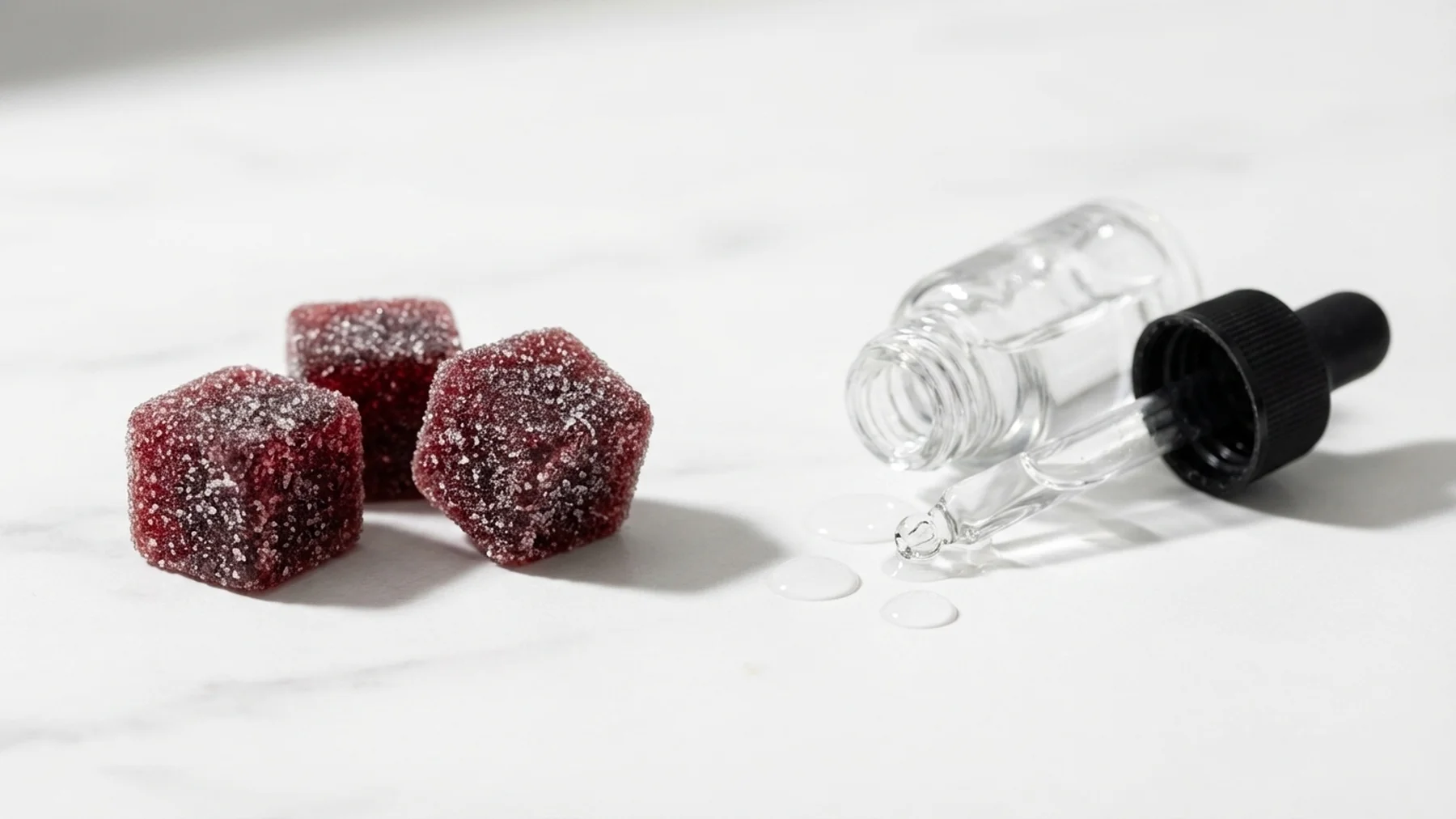
Mechanism Deep Dive: Oral vs Topical
The distinction between oral and topical tanning products is more important than the gummy-vs-drop framing. Here is what actually happens in each scenario:
Topical products (drops applied to skin): DHA reacts with amino acids in dead skin cells via the Maillard reaction, producing a brownish pigment called melanoidin. This is not real melanin. It does not involve the melanocortin pathway. It is a cosmetic surface stain that fades in three to seven days. There is no UV protection benefit. Some research has also raised concerns about DHA generating free radicals that may increase oxidative stress in deeper skin layers.
Oral supplements (gummies, pills, capsules): Carotenoids like astaxanthin and lycopene are absorbed through the gut, transported via lipoproteins in the bloodstream, and deposited in skin tissue over weeks. Research published in Photodermatology, Photoimmunology and Photomedicine (2010) found that oral carotenoid supplementation resulted in measurable changes in skin color and improved photoprotection markers. This is actual skin nutrition, not a surface reaction.
The takeaway: tanning gummies are working on a biological level that topical drops simply cannot match.
Ingredient Transparency: Why It Matters
One of the most underappreciated differences between tanning gummies vs tanning drops is labeling transparency. Reputable oral supplements are required to list every active and inactive ingredient by name and amount. You can look up the research on each one.
Many tanning drops, especially those marketed aggressively on social media, use proprietary blends that hide individual dosages. Some list ingredients in general terms without specifying concentration. This is not a minor concern, it is the difference between knowing what you are putting in your body and taking a gamble.
ChUV Ingredient Transparency: ChUV Tanning Gummies use two primary carotenoids: astaxanthin (from Haematococcus pluvialis microalgae) and lycopene (from tomato extract). Both are well-studied, naturally derived, and listed with full dosage disclosure. No proprietary blends, no undisclosed compounds.
Consistency and User Experience
Topical tanning drops, like all topical self-tanners, require careful application technique to avoid streaking, patchiness, or uneven color. Hands, knees, elbows, and ankles are notoriously difficult areas. Most users report needing practice before achieving acceptable results, and even experienced users deal with fading inconsistencies.
Tanning gummies deliver a systemic result, meaning color develops evenly across the body as carotenoids accumulate in skin tissue. There is no application process, no blending required, and no patches. You take one gummy per day and let the biology do the work.
For anyone with natural skin tone goals that look sun-kissed rather than cosmetically applied, the oral route is the more reliable path.
Tanning Drops: Pros and Cons
Pros:
- Faster surface results for special occasions
- No waiting period
- Can target specific areas
Cons:
- Results are not real melanin
- Uneven application is common
- Many products unregulated
- No antioxidant or UV protection benefit
- DHA free radical concerns
Tanning Gummies: Pros and Cons
Pros:
- Systemic, even full-body tone
- Natural carotenoid ingredients
- Antioxidant protection bonus
- Transparent labeling standard
- Results compound over time
Cons:
- 4 to 8 week timeline to see results
- Requires daily consistency
- Not a quick-fix for an event tomorrow
How to Choose the Right Tanning Method
The right choice depends on what you actually want. If you need a surface color boost for a specific event in the next 24 to 48 hours, a topical product may serve that purpose. If you want a genuine, lasting change in how your skin looks and responds to sun exposure, a science-backed oral supplement is the only category that delivers that outcome.
For those looking to understand what to realistically expect from an oral supplement, How Long Does It Take for Tanning Gummies to Work? breaks down the full 4-to-8-week timeline. For a deeper look at what makes ChUV's ingredients work on a cellular level, ChUV Tanning Gummies Ingredients: The Science Behind the Glow is the right next read.
FAQ
Are tanning drops safe?
Safety depends entirely on the specific product. Topical DHA-based drops are generally recognized as safe for cosmetic use, though some research raises concerns about free radical generation. Sublingual drops containing peptides or unregulated compounds carry a higher and less understood risk profile. Always research the ingredient list and source before use.
Do tanning gummies or tanning drops give more natural-looking results?
Tanning gummies produce a more natural result because they support the body's actual melanin production rather than creating a surface stain. The color develops gradually and evenly, which is difficult to achieve with topical application.
Can I use tanning gummies and tanning drops together?
There is no direct conflict, but the mechanisms are so different that combining them is not meaningfully additive. A topical drop handles the surface while gummies work systemically. If you want a quick surface color now while building a real tan foundation, some users do both. Just verify the ingredients in any drop you use.
Why don't tanning gummies use Beta Carotene?
Many older tanning pills used high-dose beta carotene as their primary ingredient, which could produce an orange or yellow skin tone rather than a natural tan color. High-dose beta carotene supplementation has also been associated with increased lung cancer risk in smokers in clinical trials. ChUV Tanning Gummies use astaxanthin and lycopene instead, which deliver natural tan enhancement (a genuine warm, sun-kissed glow) without the unnatural orange discoloration or safety concerns linked to beta carotene.
How do I know if a tanning drop product is safe?
Look for full ingredient disclosure with named compounds and dosages, manufacturing information referencing cGMP compliance, and no claims that sound pharmaceutical in nature (such as "activates melanin receptors" without clinical evidence). Avoid any product that resembles nasal tanning sprays reformulated as drops.
Ready to Try the Transparent Option?
If you want tanning support built on real science, full ingredient transparency, and a safety record that holds up to scrutiny, ChUV Tanning Gummies are the answer. One gummy per day. Results in 4 to 8 weeks.
Questions about whether ChUV is right for your skin goals? Contact the CAYO Nutra team directly.
The Timeline
Watch the glow build.
Scrub through eight weeks on ChUV. Pigment saturation, biology, and the moment the shift becomes visible, week by week.
Serum carotenoid levels rising. Antioxidant activity active.
The carotenoids load.
Astaxanthin and lycopene enter systemic circulation and begin to deposit in dermal tissue. You will not see the shift yet. The biology is running underneath.
11mg
Astaxanthin daily
5.5mg
Lycopene daily
7days
Consistent dosing
Built around the clinical-study window. The shift is gradual on purpose: the color reads natural because it builds like a real tan.
4.8/5 from 2,300+ reviews
What customers actually say.
Questions, answered
FAQ
How long before I see results?
Most people notice a warm tone by week 3-4, with full results at 8 weeks on one gummy daily.
Do tanning gummies actually work?
Yes. Carotenoid pigmentation is a well-documented pathway. ChUV uses astaxanthin and lycopene, both clinically studied for skin coloration.
Will ChUV turn me orange?
No. ChUV uses astaxanthin and lycopene at measured doses for a natural warm tone. Beta carotene is the ingredient that causes orange discoloration, and we refuse to use it.
Does ChUV replace sunscreen?
Astaxanthin offers real internal photoprotection by neutralizing UV-induced free radicals at the cellular level. For prolonged outdoor exposure, pair ChUV with topical SPF. Think of them as complementary.
What if I don't tan?
You don't need the sun to tan with ChUV. Carotenoid pigmentation deposits astaxanthin and lycopene directly into dermal tissue, producing a warm tone without UV. Sun exposure makes the effect richer. Astaxanthin and lycopene are photoprotective antioxidants, so pairing ChUV with moderate sun yields a deeper, more saturated tan than either alone.
Is ChUV safe to take daily?
Yes. ChUV is made in a GMP-certified facility in the USA, contains no artificial dyes, and is formulated at doses supported by clinical literature.
Can I take ChUV with other supplements?
Generally yes. Astaxanthin and lycopene are fat-soluble, so take ChUV with a meal that contains some healthy fat for best absorption.
How is ChUV different from other tanning supplements?
Most tanning gummies rely on beta carotene, which produces an unnatural orange cast at supplement doses. ChUV stacks clinically-studied astaxanthin and lycopene for a natural warm tone.
Does ChUV contain allergens?
ChUV is vegan, non-GMO, gluten-free, and free of the major allergens. See the full supplement facts panel on the product page.
How does shipping work?
Subscriptions ship free. One-time orders ship at standard domestic rates. Orders leave our fulfillment facility within 1 to 2 business days.
When should I expect to see results?
Most people see a first noticeable warmth in weeks 3-4 and full tone expression by week 6-8. Carotenoid pigmentation is cumulative, so consistent daily use matters more than dose stacking.
Do I need to keep taking ChUV to keep my color?
Yes. Carotenoid accumulation is gradual, and so is the fade. Daily use keeps your tone consistent.
Ready to start?
One gummy a day. Four weeks to visible warmth.
Join thousands already building their glow with ChUV. Subscribe and save 10%, skip or cancel anytime.