
Discover How Astaxanthin Boosts Your Workout Recovery

Astaxanthin is a potent carotenoid antioxidant that can help muscle repair recover more quickly after training by lowering oxidative stress, strengthening cell membranes, and tuning down inflammatory signals. In this guide we break down how astaxanthin aids exercise recovery at the cellular level, what athletes can reasonably expect for reduced DOMS and fatigue, and practical tips on timing, dose, and supplement form. Many active people struggle with lingering soreness and slow return-to-training after hard workouts; the evidence suggests that consistent astaxanthin use may be a natural, well-tolerated tool to speed recovery. Read on for mechanisms of action, athlete-centered benefits, a comparison of softgels versus extracts, and simple post-workout protocols. Relevant search terms like astaxanthin muscle recovery and astaxanthin post-workout are woven through the article to help you find actionable recommendations.
How Does Astaxanthin Support Muscle Recovery After Exercise?
Astaxanthin promotes muscle recovery by neutralizing exercise-driven free radicals, protecting the integrity of muscle cell membranes, and reducing pro-inflammatory signaling that can slow repair. As a membrane-active antioxidant, it helps blunt oxidative stress produced during intense training, which in turn lowers markers of muscle damage and preserves mitochondrial function. Those cellular effects create a better environment for protein synthesis and tissue repair, translating into smaller rises in delayed-onset muscle soreness and quicker recovery between sessions. The table below summarizes the primary mechanisms and the recovery outcomes you can expect.
Multiple, complementary mechanisms explain how astaxanthin speeds repair and reduces soreness after training.
| Mechanism | Biological Action | Expected Recovery Outcome |
|---|---|---|
| Antioxidant neutralization | Scavenges reactive oxygen species after exercise | Reduced muscle protein oxidation and less DOMS |
| Membrane protection | Stabilizes lipid bilayers in muscle fibers | Faster restoration of muscle integrity |
| Inflammation modulation | Lowers pro-inflammatory cytokines post-exercise | Decreased swelling and quicker functional recovery |
This concise mapping clarifies how astaxanthin’s cellular actions translate into practical recovery benefits athletes can use when planning training and rest.
Astaxanthin Alleviates Oxidative Stress and Skeletal Muscle Damage
ABSTRACT: Astaxanthin alleviates oxidative stress and skeletal muscle damage by promoting mitochondrial biogenesis
A clear summary from recent research: astaxanthin supports mitochondrial biogenesis and reduces oxidative damage in skeletal muscle, which can help the tissue recover more efficiently after stress.
Astaxanthin alleviates oxidative stress and skeletal muscle damage by promoting mitochondrial biogenesis, 2025
What Role Does Astaxanthin Play in Reducing Muscle Soreness?

Astaxanthin can lower muscle soreness by limiting oxidative damage that triggers pain pathways and by calming inflammatory cascades that sensitize pain receptors. Human and animal studies generally report modest but consistent reductions in subjective DOMS scores and faster recovery of range of motion after repeated eccentric exercise. Practically, many athletes notice less intense soreness 24–72 hours after hard sessions when astaxanthin is taken regularly, especially alongside proven recovery practices like adequate protein and sleep.
Knowing the likely size and timing of soreness reduction helps set realistic expectations for training frequency and progression.
Astaxanthin Softgels: Enhancing Athlete Performance and Recovery
5. For athletes and fitness enthusiasts, astaxanthin softgels may provide an edge in performance and recovery. Some studies have shown that astaxanthin supplementation can enhance endurance, reduce muscle fatigue, and support faster recovery after intense physical activity.
Unlocking the Benefits of Astaxanthin Softgels Capsules
How Does Astaxanthin Improve Post-Workout Muscle Repair?
Astaxanthin supports post-workout repair by stabilizing cell membranes, preserving mitochondrial function, and limiting oxidative changes to contractile proteins. Protecting mitochondria helps maintain the energy supply needed for repair and protein synthesis, which speeds tissue rebuilding after damage. Typical biomarker shifts in studies include smaller creatine kinase elevations and improved activity of antioxidant enzymes after supplementation. Those cellular improvements create a physiological environment that favors faster repair and better training adaptations over time.
Find out more about ChUV ingredients and formulations designed to make astaxanthin accessible for athletes seeking reliable recovery support.
Why Is Astaxanthin Beneficial for Athletes and Sports Performance?
Astaxanthin can help athletes by lowering fatigue, supporting consistent training, and protecting muscle function during repeated efforts through antioxidant and anti-inflammatory pathways. Used as part of a comprehensive recovery plan—alongside proper nutrition, sleep, and active recovery—astaxanthin may shorten the time needed to bounce back after intense sessions and help preserve muscular efficiency. Athletes typically use it as a supportive tool to maintain training continuity and reduce the cumulative toll of heavy workloads.
Athlete outcomes connect directly to the recovery mechanisms described above and to practical effects on training quality.
| Athlete Outcome | Evidence Strength | Key Finding |
|---|---|---|
| Reduced perceived fatigue | Moderate | Short-term trials show lower fatigue scores with daily use |
| Faster return-to-training | Moderate | Improvements in muscle soreness and function reported |
| Endurance maintenance | Emerging | Antioxidant protection supports repeated-effort performance |
This outcome-focused view helps athletes decide where astaxanthin fits in their recovery toolkit and what impact to expect on performance.
Athletes combining astaxanthin with proven recovery strategies should balance antioxidant support with traditional methods like progressive overload, targeted nutrition, and adequate rest.
Astaxanthin Improves Cycling Performance and Reduces Muscle Damage Markers
3. Short-term AST supplementation significantly enhanced exercise performance, as we found longer TTE in the AST trial (85.41 ± 4.42 min) than in the placebo trial (72.11 ± 2.24 min). Statistical analysis revealed a significant larger effect (P< 0.001; partial eta squared (η²p) = 0.71) on enhanced TTE with AST. Exhaustive exercise-induced muscle damage, indicated by increased creatine kinase (CK) and lactate dehydrogenase release, was significantly (P< 0.05) decreased by AST. A significant time and treatment interaction effect for CK (P= 0.039, η²p= 0.217) indicating potential attenuation of muscle damage by AST. In addition, lipid peroxidation, as evidenced by increased malondialdehyde levels during and immediately after exercise, was substantially inhibited by AST (P< 0.05). However, inflammatory markers (tumor necrosis factor-alpha and C-reactive protein) did not respond to either AST supplementation or exercise challenge. Substrate utilization during and after exercise appeared to be similar in both trials. Importantly, AST supplementation had no adverse effects on the ‘profile of mood states’ among participants.
Effect of astaxanthin supplementation on cycling performance, muscle damage biomarkers and oxidative stress in young adults: a randomized controlled trial, JP Tsao, 2025
How Can Astaxanthin Enhance Endurance and Strength?
Astaxanthin supports endurance and strength indirectly by protecting muscle performance across repeated efforts and reducing cumulative oxidative damage that can blunt contractile function. By preserving mitochondrial health and limiting muscle protein oxidation, astaxanthin helps athletes sustain power output across multiple workouts and recover more fully between sessions. Expect modest, incremental gains rather than dramatic leaps—treat astaxanthin as a dependable support rather than a primary ergogenic. Pairing it with targeted training and proper fueling yields the best practical results.
What Makes Astaxanthin a Natural Choice for Athletic Recovery?
Astaxanthin is a natural carotenoid sourced from microalgae with a strong safety and tolerability profile and a preference for integrating into cell membranes versus some synthetic antioxidants. Its lipophilic character lets it sit in lipid membranes where it protects structures crucial for muscle function. Athletes often choose it for daily recovery support because it offers membrane-targeted antioxidant action without heavily interfering with adaptive training signals. When selecting products, prioritize purity, standardized extract levels, and formulation type (oil-based softgels vs. powders) to ensure effective, natural supplementation.

Meet ChUV
The tanning gummy the article is about.
One daily gummy. Warm, natural tone in weeks. No UV, no beta carotene, no gimmicks.
- Clinical doses of astaxanthin + lycopene
- Visible warmth by week 3-4, peak at week 8
- Vegan, non-GMO, made in the USA
When and How Should You Use Astaxanthin for Post-Workout Recovery?
For post-workout recovery, the weight of evidence favors consistent daily dosing over single, acute post-exercise shots. Chronic intake builds tissue levels of astaxanthin that better protect muscle during repeated training. Typical effective doses are low milligram amounts taken once daily with a meal containing fat to optimize absorption and membrane incorporation. Formulation and bioavailability matter in real-world results, so opt for standardized extracts or oil-based softgels when possible. The table below compares common forms and practical dosing considerations.
| Form | Typical Dose & Notes | Practical Advantage |
|---|---|---|
| Softgel (oil-based) | 4–12 mg/day; best with meals | High bioavailability and consistent dosing |
| Standardized extract | 4–8 mg/day; check purity | Good potency per serving when standardized |
| Powder/capsule | 4–12 mg/day; may need fats | Convenient but absorbability varies |
What Is the Best Timing to Take Astaxanthin After Exercise?
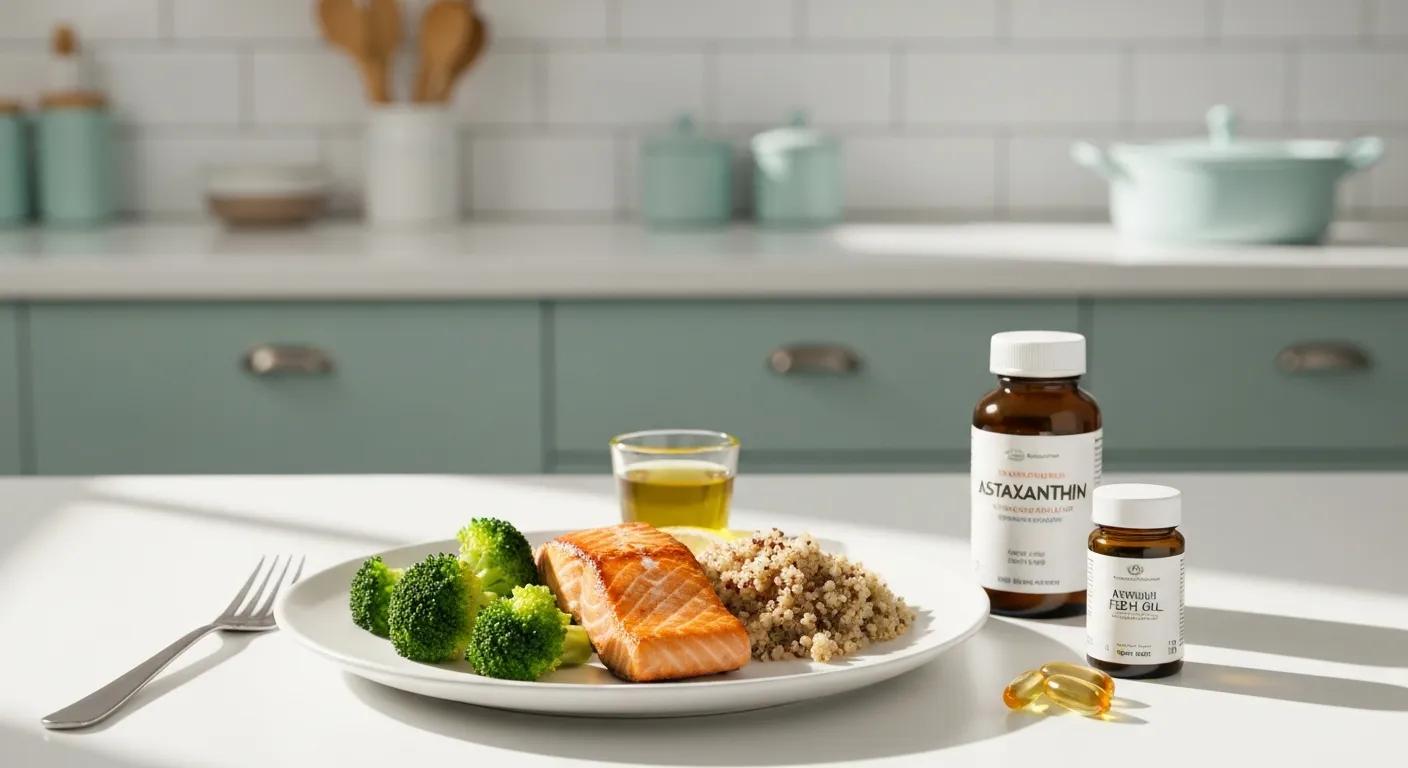
The optimal approach is daily astaxanthin taken with a meal that contains fat, which boosts absorption of this lipophilic compound and supports tissue uptake. Benefits typically appear after weeks of consistent use; single, one-off post-workout doses show limited immediate effect. For practical routines, take astaxanthin with breakfast or alongside your post-training meal to maintain steady tissue levels and align with other supplements. Regular intake promotes membrane integration and mitochondrial protection that support repeated recovery cycles.
Which Forms of Astaxanthin Are Most Effective for Recovery?
Oil-based softgels and standardized microalgae extracts tend to be the most reliably effective forms for recovery because they deliver astaxanthin in bioavailable formats that readily integrate into muscle membranes. Look for products that specify natural microalgae sources and a clear standardization of active astaxanthin content to judge potency. Powdered blends and capsules can work but often require co-consumption with fats for best uptake. Label transparency and third-party testing are useful indicators of product quality for recovery-focused use.
Learn more about ChUV’s ingredient-first approach and how their formulations make astaxanthin available in user-friendly, absorption-minded formats.
What Are the Natural Benefits of Astaxanthin in Reducing Exercise Fatigue?
Astaxanthin can reduce exercise-related fatigue by lowering oxidative stress, preserving mitochondrial energy production, and tempering inflammation that contributes to higher perceived exertion and prolonged tiredness. Together these effects support better recovery between sessions and help sustain mood and energy during heavy training blocks. Practical outcomes include reduced morning stiffness, improved readiness for the next workout, and steadier training quality over weeks of consistent supplementation. Below are focused ways astaxanthin helps combat fatigue and post-exercise inflammation.
Key fatigue-reducing benefits link to clear physiological mechanisms and measurable performance outcomes.
- Antioxidant protection: Protects muscle proteins and mitochondria from exercise-induced oxidation.
- Energy preservation: Supports mitochondrial efficiency for steady ATP production during recovery.
- Inflammation moderation: Lowers cytokine signaling that contributes to prolonged fatigue.
These combined effects suggest astaxanthin can help athletes maintain training intensity and frequency when used alongside a balanced recovery program.
How Does Astaxanthin Combat Oxidative Stress from Workouts?
Astaxanthin fights oxidative stress by directly scavenging reactive oxygen species produced during high-intensity exercise and by supporting endogenous antioxidant systems that repair oxidative damage. This two-pronged action reduces lipid peroxidation in muscle membranes and preserves mitochondrial enzymes essential for energy production. Clinical and preclinical data show blunted increases in oxidative biomarkers with regular astaxanthin use, which helps muscles recover function more quickly after repeated bouts.
Explore ChUV’s ingredient transparency and product options if you’re comparing antioxidant strategies for athletic recovery.
Can Astaxanthin Help Prevent Exercise-Induced Inflammation?
Astaxanthin helps limit exercise-induced inflammation by modulating the signaling pathways that trigger cytokine release and immune cell recruitment after muscle damage. That modulation can reduce swelling and tissue breakdown that slow recovery, which translates to less soreness and a quicker return of function. The magnitude of effect depends on dose and study design, but astaxanthin consistently trends toward anti-inflammatory benefit when combined with appropriate rest and nutrition. Expect modest, meaningful reductions in post-exercise inflammation as part of a comprehensive recovery plan.
The Timeline
Watch the glow build.
Scrub through eight weeks on ChUV. Pigment saturation, biology, and the moment the shift becomes visible, week by week.
Serum carotenoid levels rising. Antioxidant activity active.
The carotenoids load.
Astaxanthin and lycopene enter systemic circulation and begin to deposit in dermal tissue. You will not see the shift yet. The biology is running underneath.
11mg
Astaxanthin daily
5.5mg
Lycopene daily
7days
Consistent dosing
Built around the clinical-study window. The shift is gradual on purpose: the color reads natural because it builds like a real tan.
4.8/5 from 2,300+ reviews
What customers actually say.
Questions, answered
FAQ
How long before I see results?
Most people notice a warm tone by week 3-4, with full results at 8 weeks on one gummy daily.
Do tanning gummies actually work?
Yes. Carotenoid pigmentation is a well-documented pathway. ChUV uses astaxanthin and lycopene, both clinically studied for skin coloration.
Will ChUV turn me orange?
No. ChUV uses astaxanthin and lycopene at measured doses for a natural warm tone. Beta carotene is the ingredient that causes orange discoloration, and we refuse to use it.
Does ChUV replace sunscreen?
Astaxanthin offers real internal photoprotection by neutralizing UV-induced free radicals at the cellular level. For prolonged outdoor exposure, pair ChUV with topical SPF. Think of them as complementary.
What if I don't tan?
You don't need the sun to tan with ChUV. Carotenoid pigmentation deposits astaxanthin and lycopene directly into dermal tissue, producing a warm tone without UV. Sun exposure makes the effect richer. Astaxanthin and lycopene are photoprotective antioxidants, so pairing ChUV with moderate sun yields a deeper, more saturated tan than either alone.
Is ChUV safe to take daily?
Yes. ChUV is made in a GMP-certified facility in the USA, contains no artificial dyes, and is formulated at doses supported by clinical literature.
Can I take ChUV with other supplements?
Generally yes. Astaxanthin and lycopene are fat-soluble, so take ChUV with a meal that contains some healthy fat for best absorption.
How is ChUV different from other tanning supplements?
Most tanning gummies rely on beta carotene, which produces an unnatural orange cast at supplement doses. ChUV stacks clinically-studied astaxanthin and lycopene for a natural warm tone.
Does ChUV contain allergens?
ChUV is vegan, non-GMO, gluten-free, and free of the major allergens. See the full supplement facts panel on the product page.
How does shipping work?
Subscriptions ship free. One-time orders ship at standard domestic rates. Orders leave our fulfillment facility within 1 to 2 business days.
When should I expect to see results?
Most people see a first noticeable warmth in weeks 3-4 and full tone expression by week 6-8. Carotenoid pigmentation is cumulative, so consistent daily use matters more than dose stacking.
Do I need to keep taking ChUV to keep my color?
Yes. Carotenoid accumulation is gradual, and so is the fade. Daily use keeps your tone consistent.
Ready to start?
One gummy a day. Four weeks to visible warmth.
Join thousands already building their glow with ChUV. Subscribe and save 10%, skip or cancel anytime.