
Astaxanthin vs Lycopene: Differences, Benefits & Why Both Matter

TL;DR: Astaxanthin and lycopene are both carotenoids with potent antioxidant activity, but they work through different mechanisms. Astaxanthin delivers stronger singlet oxygen protection and directly supports collagen. Lycopene provides complementary coverage through cell signaling and dermal accumulation. Together, they create a more complete approach to natural skin health than either carotenoid alone.
Both astaxanthin and lycopene belong to the carotenoid family and deliver real antioxidant protection, but they are not interchangeable. Each works through distinct pathways, targets different sources of skin damage, and offers a unique benefit profile. Understanding how they differ clarifies why the best formulas include both.
What Is Astaxanthin and Where Does It Come From?
Astaxanthin is a red-orange ketocarotenoid produced primarily by the microalgae Haematococcus pluvialis. When this algae faces intense sunlight or nutrient stress, it synthesizes astaxanthin as a protective compound. That origin matters: the molecule was essentially designed by nature to absorb and neutralize intense radiation.
Unlike most carotenoids, astaxanthin spans the full cell membrane, anchoring at both hydrophilic ends and the lipophilic core. This positioning allows it to neutralize free radicals both inside and outside the cell simultaneously, a structural capability no other carotenoid replicates.
Research published in Nutrients (Davinelli et al., 2018) confirmed astaxanthin as one of the most potent naturally occurring antioxidants, with particularly strong activity against singlet oxygen, a key driver of UV-induced skin damage. Most clinical studies on skin health use daily supplemental doses ranging from 4 to 12 mg.
What Is Lycopene and How Does It Work?
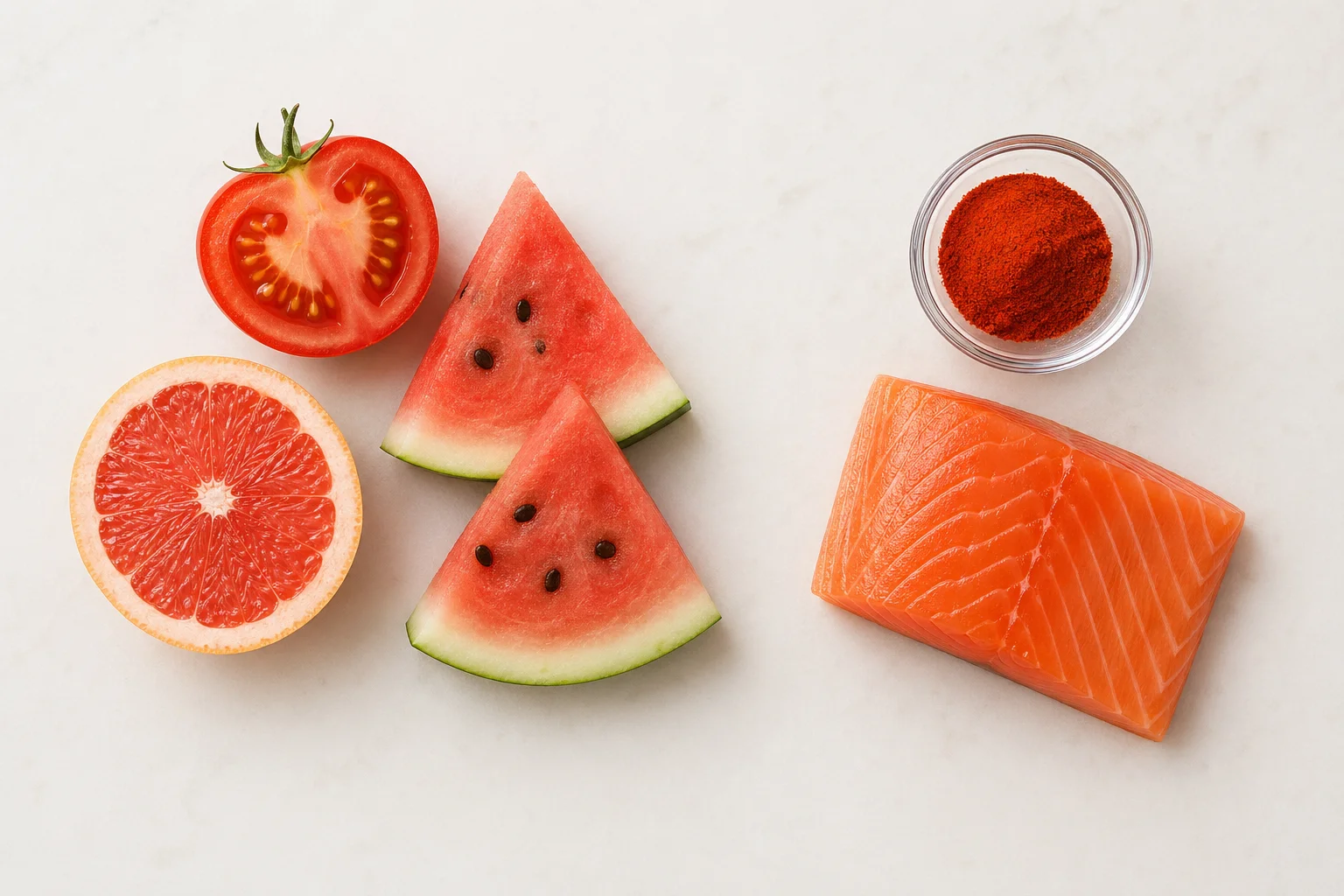
Lycopene is a bright red carotenoid found in tomatoes, watermelon, pink grapefruit, and guava. It belongs to the acyclic carotene subclass, meaning it lacks the ring structures found in other carotenoids like lutein. This structural difference affects both its antioxidant mechanism and its absorption behavior.
Lycopene neutralizes singlet oxygen and scavenges reactive oxygen species, but its strength lies in its ability to modulate cell signaling pathways linked to oxidative stress. Research by Stahl et al., published in the American Journal of Clinical Nutrition (2000), showed that lycopene from tomato paste significantly reduced UV-induced skin redness in participants after several weeks of daily supplementation. This established lycopene as one of the first dietary carotenoids with clinical evidence for sun-stress protection through natural food sources.
Like all carotenoids, lycopene is fat-soluble. Pairing it with a healthy fat such as olive oil substantially increases absorption. This is why delivery format matters when sourcing lycopene through supplements.

Meet ChUV
The tanning gummy the article is about.
One daily gummy. Warm, natural tone in weeks. No UV, no beta carotene, no gimmicks.
- Clinical doses of astaxanthin + lycopene
- Visible warmth by week 3-4, peak at week 8
- Vegan, non-GMO, made in the USA
Antioxidant Potency: How Astaxanthin and Lycopene Compare
Both compounds neutralize free radicals and reduce oxidative stress, but they differ in potency and scope. Astaxanthin is widely recognized as the more powerful singlet oxygen quencher of the two. Research by Naguib (2000), published in the Journal of Agricultural and Food Chemistry, placed astaxanthin's singlet oxygen quenching capacity significantly above that of lycopene and other common dietary antioxidants including vitamin E.
Lycopene, however, contributes broad antioxidant coverage through mechanisms astaxanthin does not fully address, particularly in cell signaling and gene expression regulation. The two carotenoids do not duplicate each other's work. They address overlapping but distinct oxidative pathways, which is why combining them amplifies the overall protective effect.
Lutein and zeaxanthin offer a useful comparison point. Lutein zeaxanthin combinations are most studied for macular and eye health support, while astaxanthin and lycopene show stronger clinical relevance for surface skin health and photoprotection. Lutein accumulates in different tissue sites than lycopene, and its direct impact on skin tone is more limited than either of the two carotenoids in this comparison.
Skin Benefits: What Each Carotenoid Delivers
Astaxanthin has the strongest direct evidence for skin-specific outcomes. Clinical research has documented improvements in skin elasticity, moisture retention, and texture with consistent daily use. In a 2012 study by Tominaga et al. published in Acta Biochimica Polonica, participants taking astaxanthin supplements showed measurable improvements in skin condition after eight weeks. Astaxanthin also supports collagen integrity by reducing matrix metalloproteinase activity, the enzymatic process that breaks down collagen under UV stress and oxidative exposure.
Lycopene adds a complementary layer of skin protection. Because it accumulates in the dermis following dietary absorption, lycopene contributes to the skin's natural capacity to handle UV-induced oxidative stress at the cellular level. This accumulation does not block UV rays the way topical sunscreen does, but it reduces the cellular damage that sun exposure creates in skin tissue.
Both carotenoids contribute to the gradual natural skin tone shift that comes from consistent supplementation. This is a photoprotection mechanism driven by carotenoid accumulation in skin tissue, producing a natural warm glow rather than an abrupt or cosmetically artificial change in appearance.
Absorption and Bioavailability: Getting the Most From Each
Both astaxanthin and lycopene are fat-soluble carotenoids, which means absorption improves significantly when consumed alongside dietary fat. For lycopene specifically, pairing with olive oil is a well-documented strategy. Studies confirm that lycopene bioavailability from cooked or processed tomato sources with added fat exceeds that from raw tomatoes alone, primarily because heat breaks down cell walls and fat aids transport through the intestinal lining.
Astaxanthin absorption follows similar fat-dependent rules, but its membrane-spanning structure makes it highly stable once absorbed. Unlike some carotenoids, astaxanthin does not convert to other compounds in the body, so the full active form reaches target tissues including skin cells and the dermis.
The source of each compound also matters for consistent results. Astaxanthin derived naturally from Haematococcus pluvialis is the standard used in human supplements targeting skin health. Lutein sourced from marigold extract and lycopene from tomato oleoresin follow similar best-practice sourcing principles, ensuring consistent carotenoid potency and bioavailability in supplement form.
The Case for Using Astaxanthin and Lycopene Together
Taken together, astaxanthin and lycopene provide broader coverage than either carotenoid alone. Astaxanthin leads on raw antioxidant potency and photoprotection at the cellular membrane level. Lycopene extends that protection through cell signaling modulation and dermal accumulation where UV damage initiates.
The combined effect provides more complete defense against the two primary drivers of visible skin aging: oxidative stress and UV-induced cellular damage. Collagen support, skin tone consistency, and long-term skin health all benefit from consistent daily intake of both compounds working in parallel.
This is the rationale behind formulating ChUV tanning gummies with both astaxanthin and lycopene rather than relying on one alone. Each dark reddish-purple sugar-coated cube delivers a calibrated daily dose designed around the clinical evidence for how these carotenoids work best together. Most users begin to notice results within four to eight weeks of consistent daily use.
Frequently Asked Questions
Is astaxanthin or lycopene better for skin?
Astaxanthin has the stronger direct evidence for skin-specific outcomes, including collagen support, elasticity improvement, and reduced UV-induced cellular damage. Lycopene provides complementary protection through dermal accumulation and cell signaling antioxidant activity. Neither is definitively superior because they target different aspects of skin health. The strongest outcomes in clinical research come from combining both carotenoids in a consistent daily routine.
Can I get enough astaxanthin and lycopene from food sources alone?
Lycopene is available in meaningful amounts from tomatoes, watermelon, and pink grapefruit. Astaxanthin, however, is difficult to source in clinically relevant amounts through diet alone. Wild-caught salmon and other seafood contain astaxanthin, but reaching the 4 to 12 mg daily range used in clinical studies would require very large daily servings of seafood. Supplements provide a more consistent and practical path to the doses studied for skin health support.
How long before astaxanthin and lycopene supplements show results?
Most clinical studies documenting measurable skin improvements used supplementation periods of eight to twelve weeks. Some participants in shorter trials noticed improvements in skin tone and moisture within four weeks of daily use. Results build gradually, and consistency across weeks matters far more than any single dose. Daily supplementation over at least two months gives the most reliable outcomes.
Do astaxanthin and lycopene cause changes to skin color?
Both carotenoids contribute to a gradual, natural sun-kissed tone over weeks of consistent use. This differs significantly from the unnatural yellowish-orange tinting associated with high-dose beta carotene supplementation. Astaxanthin and lycopene, at clinically studied doses, produce a natural warm glow that reflects carotenoid accumulation in skin tissue rather than an uneven or artificially forced color shift.
Are both carotenoids safe for daily supplementation?
Astaxanthin and lycopene both have strong safety records across human clinical research. Astaxanthin has been reviewed in multiple clinical trials with no serious adverse effects reported at doses used for skin health support. Lycopene consumed through food and supplements is similarly well-tolerated. Anyone with conditions affecting fat absorption or taking medications that interact with fat-soluble compounds should consult a healthcare provider before starting carotenoid supplements.
Start With the Right Formula
Astaxanthin and lycopene work best when paired together in a daily routine backed by real clinical research. The ChUV tanning gummies formula combines both carotenoids in a single daily dose designed around the evidence for how they support natural skin health together. Questions about what fits your routine? Contact the CAYO Nutra team directly.
The Timeline
Watch the glow build.
Scrub through eight weeks on ChUV. Pigment saturation, biology, and the moment the shift becomes visible, week by week.
Serum carotenoid levels rising. Antioxidant activity active.
The carotenoids load.
Astaxanthin and lycopene enter systemic circulation and begin to deposit in dermal tissue. You will not see the shift yet. The biology is running underneath.
11mg
Astaxanthin daily
5.5mg
Lycopene daily
7days
Consistent dosing
Built around the clinical-study window. The shift is gradual on purpose: the color reads natural because it builds like a real tan.
4.8/5 from 2,300+ reviews
What customers actually say.
Questions, answered
FAQ
How long before I see results?
Most people notice a warm tone by week 3-4, with full results at 8 weeks on one gummy daily.
Do tanning gummies actually work?
Yes. Carotenoid pigmentation is a well-documented pathway. ChUV uses astaxanthin and lycopene, both clinically studied for skin coloration.
Will ChUV turn me orange?
No. ChUV uses astaxanthin and lycopene at measured doses for a natural warm tone. Beta carotene is the ingredient that causes orange discoloration, and we refuse to use it.
Does ChUV replace sunscreen?
Astaxanthin offers real internal photoprotection by neutralizing UV-induced free radicals at the cellular level. For prolonged outdoor exposure, pair ChUV with topical SPF. Think of them as complementary.
What if I don't tan?
You don't need the sun to tan with ChUV. Carotenoid pigmentation deposits astaxanthin and lycopene directly into dermal tissue, producing a warm tone without UV. Sun exposure makes the effect richer. Astaxanthin and lycopene are photoprotective antioxidants, so pairing ChUV with moderate sun yields a deeper, more saturated tan than either alone.
Is ChUV safe to take daily?
Yes. ChUV is made in a GMP-certified facility in the USA, contains no artificial dyes, and is formulated at doses supported by clinical literature.
Can I take ChUV with other supplements?
Generally yes. Astaxanthin and lycopene are fat-soluble, so take ChUV with a meal that contains some healthy fat for best absorption.
How is ChUV different from other tanning supplements?
Most tanning gummies rely on beta carotene, which produces an unnatural orange cast at supplement doses. ChUV stacks clinically-studied astaxanthin and lycopene for a natural warm tone.
Does ChUV contain allergens?
ChUV is vegan, non-GMO, gluten-free, and free of the major allergens. See the full supplement facts panel on the product page.
How does shipping work?
Subscriptions ship free. One-time orders ship at standard domestic rates. Orders leave our fulfillment facility within 1 to 2 business days.
When should I expect to see results?
Most people see a first noticeable warmth in weeks 3-4 and full tone expression by week 6-8. Carotenoid pigmentation is cumulative, so consistent daily use matters more than dose stacking.
Do I need to keep taking ChUV to keep my color?
Yes. Carotenoid accumulation is gradual, and so is the fade. Daily use keeps your tone consistent.
Ready to start?
One gummy a day. Four weeks to visible warmth.
Join thousands already building their glow with ChUV. Subscribe and save 10%, skip or cancel anytime.